
Industry insiders in India warn that any such move in the pharmaceutical sector could be counterproductive for the US as it may face increased drug shortages if tariffs are imposed on such imports.

On average, stocks that debuted last year are down 37 per cent from their peak levels.

The Centre may overshoot the Rs 56,260 crore target for dividend receipts from central public-sector enterprises (CPSEs) set for FY25 and is likely to end up getting around Rs 65,000 crore this financial year, according to a senior government official. This excludes dividend from nationalised banks and financial institutions. As on October 21, the Centre collected Rs 28,913 crore as dividend and other investment from CPSEs, accounting for over 50 per cent of the Budget Estimate for FY25.

'Consider 40% to 50% in equities, 10% in gold as a hedge, and the remaining 30% to 40% split between multi-asset funds and hybrid funds.'

The Budget has given signals that India is sensitive to the US needs and willing to walk the extra mile, but if need be, we should respond in equal measure as a sovereign nation, notes Ajay Srivastava.

The trade war between the US and China is expected to benefit Indian exporters in increasing their shipments to the American market, sources said. They said the country was the fourth-largest gainer when the US imposed higher duties on Chinese goods during US President Donald Trump's first tenure.

'There's a misconception that all Rs 1 lakh crore will be spent immediately, leading to higher consumption of FMCG goods, travel, and vehicle purchases.' 'While some of this money will go toward consumption, not all of it will.' 'The impact depends on where people deploy their savings.'

India will need to grow at an average 7.8 per cent to become a high-income country by 2047, a World Bank report said on Friday. To achieve this goal India would require reforms in financial sector as well as in land and labour market, the World Bank said in its India Country Memorandum titled 'Becoming a High-Income Economy in a generation'.

The stocks are largely from sectors such as chemicals, finance and cement, which struggled earlier but the worse seems to be behind them.

Novelis' Q3FY25 volume stood at 904,000 tonnes (down 1 per cent Y-o-Y, down 4 per cent Q-o-Q), due to lower VAP and automotive shipments. Revenue stood at $4.1 billion (+4 per cent Y-o-Y, down 5 per cent Q-o-Q).

Among the cities that have fully implemented their projects are Agra, Varanasi, Madurai, Coimbatore, Udaipur, Pune, Surat, and Vadodara

Of Trump's reciprocal tariffs and trade deals

From the 30-share blue-chip pack, Adani Ports jumped over 5 per cent. NTPC, Tata Steel, Bajaj Finserv, Zomato, Bajaj Finance, Tata Motors, State Bank of India, IndusInd Bank and Maruti were among the other big gainers. From the 30-share pack, Hindustan Unilever, Titan, Tata Consultancy Services, Infosys and UltraTech Cement were the other laggards.

From the 30 blue-chip pack, Mahindra & Mahindra, IndusInd Bank, Bajaj Finance, Tata Motors, Bajaj Finserv, Nestle and ICICI Bank were the biggest gainers. State Bank of India, Tata Steel, Adani Ports, Zomato, UltraTech Cement and HCL Tech were among the laggards.

Inflows into mutual funds' equity schemes increased by over 14 per cent on-month to Rs 41,156 crore in December, even as market volatilities continued. The small and midcap schemes of mutual funds continued to attract investor interest with inflows touching record highs during the month, despite the concerns being expressed about the two segments for the risk they portend, industry body Amfi said.

Farm workers and drivers will figure among the fastest growing jobs over the next five years, while roles of cashiers and ticket clerks will see the largest decline, a new study showed on Wednesday. In its Future of Jobs Report 2025, the World Economic Forum (WEF) also said that 170 million new jobs will be created by 2030, while 92 million are projected to be displaced, resulting in 78 million net new jobs.

Even as the slowdown in the information technology (IT) services sector deepens, banking, financial services and insurance (BFSI), as well as oil and gas companies, emerge as the primary drivers of corporate earnings in the country. The IT services sector's share in corporate earnings declined to a five-year low of 17.4 per cent in the second quarter (Q2) of 2023-24 (FY24), whereas banks and finance companies accounted for 46.5 per cent, and oil and gas firms contributed 16.8 per cent. At their peak, IT services firms like Tata Consultancy Services (TCS), Infosys, HCLTech, and Wipro represented just over a third of the combined net profit of all listed companies in the Business Standard sample.

From the 30-share Sensex blue-chip pack, Titan, Adani Ports, UltraTech Cement, Tata Consultancy Services, NTPC, Bharti Airtel, Tech Mahindra, Infosys, Hindustan Unilever and JSW Steel were the biggest laggards.

The Union Finance Ministry on Tuesday said that aggregate business of public sector banks (PSBs) has shown strong growth of 11 per cent in the first half of the financial year 2024-25 (H1FY25) to touch Rs 236 trillion. The operating and net profit were also robust. At Rs 1.5 trillion, operating profit grew by 14.4 per cent year-on-year (Y-o-Y) while the net profit saw an impressive 25.6 per cent jump at Rs 85,520 crore in the first half of FY25.

New supply of office space across seven major cities fell 4 per cent annually in the July-September quarter to 12.8 million square feet while gross leasing of prime workspace rose 17 per cent, according to Vestian. In its report released on Wednesday, real estate consultant Vestian said the fresh supply of office space in Hyderabad declined 25 per cent in the July-September quarter to 4.10 million square feet.

If the fiscal deficit target of 4.9% of GDP has to be met for 2024-2025, which the government must in view of the uncertainties and challenges emerging both domestically and globally, the finance ministry may see in the composition of the current year's capex a sliver of hope, notes A K Bhattacharya.

Do we have enough trained oncologists and medical professionals in India to man these over 4,500 beds in the public sector?

High-end apartments, penthouses, and bungalows boasting amenities like swimming pools, expansive driveways, and premium interiors are becoming highly sought after.

Leasing of retail space in shopping malls and prominent high streets dropped 1 per cent to 1.63 million square feet during July-September across top eight cities, according to Cushman & Wakefield. The leasing stood at 1.63 million square feet in the year-ago period. Real estate consultant Cushman & Wakefield on Thursday released its Q3-2024 'Retail MarketBeat' report, which highlighted a sustained momentum across India's main streets, leading retail growth across the top 8 cities.

A bench of Justices Sudhanshu Dhulia and Ahsanuddin Amanullah is likely to hear a plea filed by Capt. Rakesh Walia (retired) challenging an order of the Delhi high court which dismissed his petition.

Largecap companies are generally less vulnerable to economic slowdowns than their mid- and smallcap counterparts.

Talks on global climate finance virtually ground to a halt last week at COP29, the annual United Nations (UN) Climate Change event in Baku, Azerbaijan, as the developed world, led by the European Union (EU), and developing countries including India, Brazil, South Africa, and a clutch of island nations and African countries faced a wide chasm between their expectations. This has raised doubts about whether an agreement can be reached this week or whether talks will spill over to COP30, to be held next year in Benem, Brazil.

Under capital expenditure, Rs 48,614 crore has been set aside for aircraft and aero engines while Rs 24,390 crore has been allocated for the naval fleet.

The motorcycle owner, a bouncer by profession, said the incident occurred around 11.30 pm when he was returning to home from duty. He said that he had a narrow escape since he was standing near his motorcycle at the time of the incident.
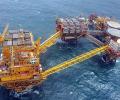
State-owned Oil and Natural Gas Corporation (ONGC) expects a USD 10.3 billion revenue boost from increased oil and gas production, achieved through a partnership with UK's BP in the Mumbai High field.

Union Cabinet on Thursday approved two major schemes -- PM Rashtriya Krishi Vikas Yojana and Krishonnati Yojana -- with an expenditure of over Rs 1 lakh crore to promote sustainable agriculture and ensure food security.

The calendar year 2024 is set to go down as the best year for initial public offerings (IPOs) in terms of funds raised. Following the IPOs of food delivery major Swiggy and two other companies slated for next week, this year's total will reach nearly Rs 1.2 trillion, going past 2021's record tally of Rs 1.19 trillion. Swiggy's Rs 11,327 crore IPO, the sixth-largest in India, and solar energy firm Acme Solar Holdings' Rs 2,900 crore IPO opened on Wednesday (Nov 6), while health-tech firm Sagility India's Rs 2,106 crore IPO opened a day earlier.

India's economic growth slowed to a 15-month low of 6.7 per cent in April-June 2024-25, mainly due to poor performance of the agriculture and services sectors, government data showed on Friday. The gross domestic product (GDP) expanded by 8.2 per cent in the April-June quarter of 2022-23. India, however, remained the fastest-growing major economy, as China posted a 4.7 per cent growth in April-June 2024.

Billionaire Gautam Adani's group on Monday announced its exit from FMCG joint venture Adani Wilmar by selling its entire stake to the Singaporean partner and in the open market for an estimated over $2 billion in a first major deal since the US bribery indictment. In a statement, Adani Enterprises Ltd -- which held 43.94 per cent stake in Fortune brand cooking oil, wheat flour and other food product maker Adani Wilmar Ltd -- said it will sell 31.06 per cent stake to Wilmar International. About 13 per cent will be sold in the open market to meet minimum public shareholding requirements.
It may sound bizarre, but incidents of public sector bankers dying by suicide could probably equal the number of such bankers quitting their jobs, reveals Tamal Bandyopadhyay.

India recorded economic growth of 7.8 per cent in the April-June quarter of 2023-24 against 13.1 per cent in the year-ago period, as per the National Statistical Office (NSO) data released on Thursday. India remains the fastest-growing major economy as China's GDP growth in the April-June quarter was 6.3 per cent.

India's industrial production slowed to a five-month low of 4.2 per cent in June 2024, mainly due to poor performance of the manufacturing sector, though power and mining sectors continue to perform well, as per official data released on Monday. The factory output growth, measured in terms of the Index of Industrial Production (IIP), was 6.2 per cent in May, 5 per cent in April, 5.5 per cent in March, 5.6 per cent in February and 4.2 per cent in January 2024.

Research and development (R&D) spending by BSE 100 companies has grown steadily, rising from 0.89 per cent of revenue in FY20 to 1.32 per cent in FY24, averaging around 1 per cent over the period in-between, according to data compiled from Bloomberg and company annual reports. Also, these companies more than doubled their R&D spending in absolute terms over these five years: From Rs 25,041 crore to Rs 63,072 crore. While this reflects a prioritisation of innovation, corporate R&D investment remains relatively conservative.

The country's current account deficit widened marginally to $9.7 billion or 1.1 per cent of GDP in April-June 2024, as against $8.9 billion or 1 per cent in the year-ago period, Reserve Bank of India said on Monday. The crucial number representing the country's external sector strength has come on the heels of a surplus of $4.6 billion or 0.5 per cent of GDP recorded in the preceding January-March quarter. The Reserve Bank attributed the year-on-year widening in current account deficit to a rise in merchandise trade gap which was recorded at $65.1 billion in Q1 FY25 as compared to $56.7 billion in the year-ago period.

These 10 stocks represent the best mix of value and growth, offering relatively low price-to-earnings and price-to-book ratios, a high return on equity, and sufficiently high potential from current levels.
